
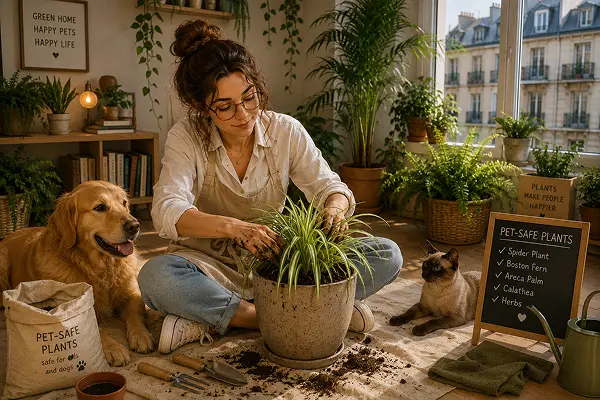
Sourcing pet-safe indoor plants for small apartments became my priority after I learned about toxic houseplants the hard way through a frantic late-night search when my cat chewed a pothos leaf. Pothos, it turns out, is toxic to cats. The plant I’d chosen specifically because it was ‘impossible to kill’ was quietly poisonous to the animal I’d had for six years.
If you share a small apartment with cats or dogs, plant selection isn’t just an aesthetic decision. Here’s what actually works, and what to avoid entirely.
Why This Matters More Than Most Guides Suggest
In a small apartment, your animals have access to almost everything. There’s no garden to banish plants to, no room where the door stays firmly closed. The distance between a curious cat and a toxic plant is often just a bookshelf and a moment of boredom.
Some of the most popular houseplants, pothos, peace lily, snake plant, monstera, are toxic to pets to varying degrees. Symptoms range from mild digestive upset to serious organ damage. It’s worth being deliberate.
Kittens and puppies deserve particular caution here. Younger animals explore the world mouth-first far more than adult cats and dogs do, and a plant that an older, more settled animal simply ignores can be genuinely tempting to a curious young one still working out what’s food and what isn’t.
Top-Tier Pet-Safe Plants for Small Apartments
Spider Plant (Chlorophytum comosum)
Completely non-toxic to cats and dogs, and one of the most forgiving houseplants available. Spider plants tolerate low light, irregular watering, and general neglect with equal grace. They produce cascading ‘spiderettes’ that look charming in hanging baskets — which also keeps them conveniently out of reach of ground-level nibblers.
Boston Fern (Nephrolepis exaltata)
Lush, full, and completely safe for pets. Boston ferns love humidity, making them excellent for bathrooms. They need more moisture than most plants, but their safety record with animals is impeccable. Place them high if your cat is an enthusiastic chewer, not for safety, but to spare the fern.
Areca Palm (Dypsis lutescens)
A statement plant that’s safe for both cats and dogs. Areca palms add a tropical feel to any room, release moisture into dry apartment air, and grow well in bright indirect light. They’re tall enough that most animals lose interest — and dramatic enough to justify the shelf space.
Calathea
Non-toxic and visually striking, with patterned leaves in greens, purples, and creams that move slightly throughout the day. Calatheas prefer indirect light and slightly higher humidity — conditions common in older European apartments. They’re fussier than most plants on this list, but the look is worth the attention.
Culinary Herbs: Basil, Dill, Rosemary, Thyme
Most culinary herbs are safe for pets in small quantities. If your cat nibbles your basil, no harm done. Avoid mint in large quantities for cats, and always double-check any new addition against the ASPCA toxic plant database before bringing it home.
Plants to Remove From a Pet Household Entirely
- Pothos — toxic to both cats and dogs, despite being everywhere
- Monstera deliciosa — toxic if ingested
- Peace lily — causes severe mouth and throat irritation
- Snake plant — toxic to cats and dogs despite its ubiquity
- Aloe vera — toxic to pets, even though it’s beneficial for humans
Practical Ways to Pet-Proof Your Plant Setup
- Use hanging planters or wall-mounted shelves to put vulnerable plants out of reach
- Place plants on top of tall furniture, bookcases, fridges, high shelves
- Use citrus-based deterrent sprays on soil to discourage digging
- Provide cat grass as an alternative, many cats chew plants out of boredom or instinct, and cat grass redirects that behaviour safely
- Check the ASPCA toxic plant database whenever adding something new
What to Do If Your Pet Eats a Toxic Plant
Even with careful planning, accidents happen, and knowing what to do in the moment matters more than any prevention strategy. If you catch your cat or dog chewing on a plant you know is toxic, remove any remaining plant material from their mouth if you can do so safely, and try to identify exactly which plant it was, having the name ready saves precious time on the phone.
Contact your vet or an animal poison control line immediately rather than waiting to see if symptoms appear. Some toxins, like those in lilies for cats, cause serious harm before any obvious signs show up, so “wait and see” is not a safe approach with plant ingestion. Keep a note of the plant names in your home somewhere accessible, a phone note works well, so you’re not searching for spellings during an emergency.
Mild symptoms like a bit of drooling or one instance of vomiting after a small nibble often resolve on their own, but repeated vomiting, lethargy, difficulty breathing, or swelling around the mouth warrant an immediate vet visit rather than a wait-and-watch approach.
Plants and Pets, Together
Creating a green apartment when you share it with animals takes a bit more planning — but it’s completely achievable. The plants listed here aren’t compromise choices. Many of them are genuinely beautiful, easy to care for, and deeply satisfying to live with.
Do your research before bringing anything new home, use height and placement strategically, and enjoy both your plants and your animals without the worry. They can coexist beautifully — you just have to set it up right.
About Olivia
Olivia Knows Things is the editorial voice behind this blog, created to share practical, tested ideas that help people create beautiful, comfortable, and sustainable homes.