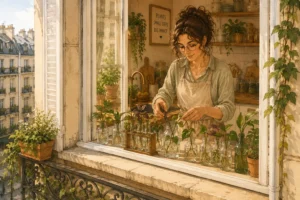
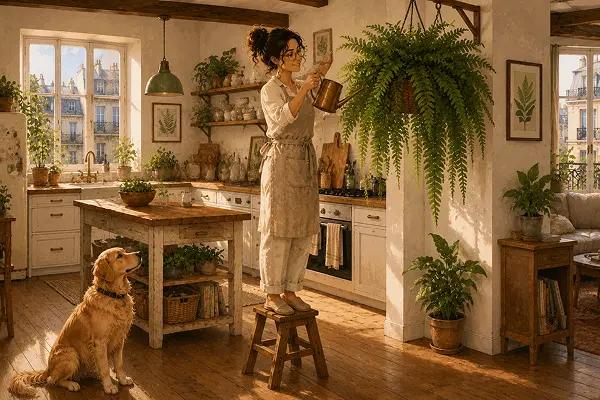
Discovering the best hanging plants for small apartments became my obsession when I moved into my current historic Paris apartment, where the traditional high ceilings were the first feature I noticed.Standing at nearly three metres high, they felt like an absolute architectural luxury after spending years cramped in standard-height, boxy rental rooms. However, the second thing I noticed was a distinct design dilemma: all my human-scaled furniture looked absurdly small, low, and isolated against those massive blank walls. The solution to bridging this empty vertical gap took me embarrassingly long to discover, but it lay in shifting my perspective upward. Specifically, utilizing targeted hanging plants.
High ceilings in a small apartment bedroom or living room represent an incredible spatial opportunity that most urban renters leave completely unused. Instead of cluttering your limited floor square footage with bulky planters, you can train your interior design to grow upward. Here is how to strategically master vertical indoor gardening.
Why Hanging Plants for Small Apartments Transform Rooms
The core visual problem with a small room featuring high ceilings is the severe disconnect between the upper and lower halves of the environment. Because rugs, sofas, and coffee tables sit strictly in the bottom half, a cold, empty expanse of plaster dominates the space above your head, making the room feel oddly tall, narrow, and disproportionate. Hanging plants act as a living visual bridge. They draw the human eye upward naturally, filling the empty vertical volume with soft, organic textures and making the overall architecture feel perfectly proportioned rather than cavernous.
Furthermore, suspended greenery solves the perennial small-space restriction of wanting to expand your jungle collection without sacrificing precious tabletop or floor real estate. By hanging pots from structurally sound points, you maximize every square inch of your modern home setup.
Beautiful Trailing Varieties for Small Urban Spaces
Selecting the right botanical specimens is crucial for a successful vertical display. You require species that naturally cascade downward with density rather than growing rigidly upward.
Pothos (Epipremnum aureum)
This is the definitive, unkillable trailing apartment plant. Pothos cascades magnificently over the edges of its container, growing vigorously in almost any indoor light condition, from deep corner shade to bright windowsills. It is highly forgiving of irregular watering routines, producing long, leafy vines that can easily reach two metres or more over time. In a tall room, a mature golden or marble queen pothos hanging from a secure ceiling fixture creates a dramatic, lush waterfall effect that instantly anchors the room’s design.
String of Pearls (Senecio rowleyanus)
For rooms receiving abundant natural light, this succulent offers one of the most distinctive visual textures available. Its small, perfectly spherical leaves resemble delicate green beads cascading down thin, thread-like stems. It requires excellent indirect light and highly mindful watering habits, as it is incredibly susceptible to root rot from stagnant moisture. It is best positioned where bright side-light accentuates the translucent, window-like slits on its unique succulent beads.
Tradescantia (Inch Plant)
Vigorous, fast-growing, and visually striking, Tradescantia varieties bring vital color contrast into a neutral apartment palette. Available in rich shades ranging from deep forest green to vibrant royal purple and silver stripes, this plant spills enthusiastically from any hanging vessel. Beyond its stunning look, Tradescantia is famous for improving indoor air quality by absorbing common pollutants, a benefit thoroughly documented in the comprehensive NASA Clean Air Study guidelines for healthy enclosed spaces. It roots incredibly fast from simple water cuttings, meaning one parent plant can easily supply propagation pieces for your entire apartment.
Boston Fern (Nephrolepis exaltata)
If your apartment suffers from higher humidity or you wish to elevate a bathroom corner, the Boston fern is an exceptionally lush candidate. These historic plants thrive on consistent ambient moisture and indirect filtered light, requiring regular misting or proximity to a small humidifier to prevent their delicate fronds from drying out. The payoff for this care is an impressive, dense explosion of feathered green fronds that look remarkably statuesque when suspended high. For an in-depth botanical breakdown on soil humidity levels for indoor ferns, you can consult the official RHS container planting index for urban indoor gardens.
Heartleaf Philodendron (Philodendron hederaceum)
Featuring glossy, heart-shaped leaves and long trailing stems, this resilient species offers exceptional tolerance for low-light corners and accidental neglect. While visually similar in habit to the pothos, it features a more delicate leaf texture and a deep emerald hue. Positioning a mature philodendron high in an unused corner allows it to catch ambient light beautifully, softening sharp architectural lines.
Safe Suspension Methods for Rental Properties
Mounting heavy pots from a high ceiling requires careful attention to household structural safety, especially if you are dealing with historic plaster ceilings.
- Heavy-duty toggle bolts: The absolute most secure option for anchoring into hollow drywall or ceiling plaster boards when support joists are inaccessible.
- Tension rods across alcoves: An excellent, damage-free alternative for renters. Position a heavy industrial shower tension rod across a window frame or deep alcove to hang multiple small pots without drilling holes.
- Wall-mounted iron brackets: Installing sturdy brackets at staggered vertical heights across an empty wall allows you to build a layered, dimensional living gallery.
- Woven macramé hangers: Utilizing cotton or jute ropes adds a warm, tactile bohemian element to the room while securely gripping containers of various sizes. To ensure your hanging vessels drain perfectly without ruining your floors, consider using unglazed clay inserts. Read our comprehensive guide on Decorating With Indoor Terracotta Pots on a Sustainable Budget to see why raw clay is the ultimate material for controlling indoor root health.
Mastering the Vertical Upkeep Routine
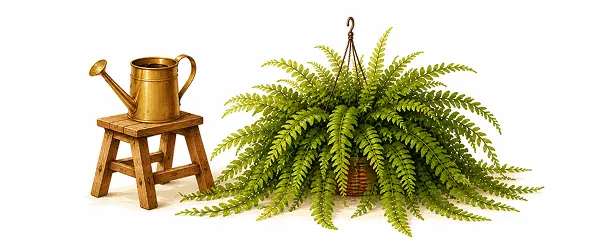
The primary challenge of vertical indoor gardening is accessibility; reaching a pot dangling two and a half metres high can easily lead to watering neglect. To manage this practically, invest in a lightweight wooden step stool or a long, narrow-spouted watering watering can that eliminates awkward reaching. When selecting pots, always opt for lightweight materials or ensure your ceiling hooks are anchored directly into a solid wooden ceiling joist rather than unstable plaster alone to prevent sudden falls.
About Olivia
Olivia Knows Things is the editorial voice behind this blog, created to share practical, tested ideas that help people create beautiful, comfortable, and sustainable homes.