
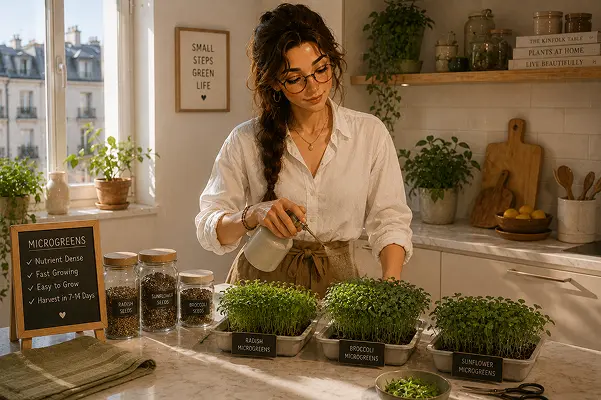
Starting a microgreens garden on your kitchen counter genuinely surprised me the first time I harvested the seedlings and tasted how sharp and fresh they were. Not because it worked, I’d followed the instructions carefully, but because they tasted so much better than anything I’d bought at a shop. Sharper, fresher, more alive. And they’d taken seven days to grow in a shallow tray on the counter where I usually dump my keys.
Microgreens are one of those rare things that deliver exactly what they promise. Here’s how to get started, even if you’ve never grown anything before.
What Microgreens Actually Are
Microgreens are the seedlings of vegetables and herbs, harvested just after the first true leaves appear, usually between 7 and 14 days after germination. They sit between sprouts (grown in water, no soil) and baby greens (older, grown longer). That sweet spot gives them intense flavour, a satisfying texture, and an impressive nutritional profile.
They’re also, genuinely, one of the easiest things you can grow indoors.
They also solve a specific small-apartment problem, wanting fresh, homegrown produce without the space, light, or time commitment a full vegetable garden demands. A single tray takes up less counter space than a fruit bowl and asks for a week of attention rather than a season.
Everything You Need Before Day One
The setup is minimal. Gather these before you start:
- A shallow tray (5–7 cm deep) with drainage holes, a simple plastic seed tray works perfectly
- A second tray without holes to sit underneath and catch water
- Seed-starting mix or coconut coir, not regular potting soil, which is too dense
- Microgreen seeds, radish, sunflower, broccoli, peas, or a mixed blend to start
- A spray bottle for gentle, even watering
- A dark cover, another tray turned upside down, a damp cloth, or a lid
Total cost for a first setup: roughly 10–20 euros. After that, you only need to restock seeds, which cost almost nothing per tray.
Day by Day: From Seed to Harvest
Day 1 — Sow
Fill your tray with about 3 cm of moist growing medium. Scatter seeds densely and evenly across the surface, far more densely than you’d plant regular vegetables. Press them gently into the medium with your hand, mist with the spray bottle until the surface is evenly damp, and cover with your dark lid.
Days 2–3 — Germination
Keep the tray covered and check moisture daily. Mist if the surface looks dry. You’ll start seeing white sprouts push up within 24–48 hours for fast varieties like radish. This part feels almost magical, something is happening underneath, even when you can’t see it yet.
Days 4–5 — Uncover and introduce light
Once most seeds have sprouted and seedlings are 2–3 cm tall, remove the cover and move the tray to a bright spot, a windowsill with indirect light works well. The greens will start turning from yellow to deep green within hours of light exposure. Watching that colour shift happen is oddly satisfying.
Days 6–7 — Ready to harvest
Continue misting once or twice daily. By day 7, fast varieties like radish will have their first true leaves and be ready to cut. Slower varieties like sunflower or peas need 10–12 days, worth the wait.
Ideal Microgreens to Start With
- Radish — ready in 5–7 days, spicy and crisp, almost impossible to get wrong
- Sunflower — ready in 10–12 days, nutty flavour, satisfying crunch
- Broccoli — ready in 7–10 days, mild flavour, impressively nutritious
- Peas — ready in 10–14 days, sweet and tender, beautiful in salads
Harvesting Techniques for Maximum Flavor
Use clean scissors to cut the microgreens just above the soil line. Rinse gently, pat dry, and use immediately for the best flavour. Microgreens don’t regrow after cutting, unlike herbs, so once harvested, start a fresh tray. Once you get into the rhythm, keeping two or three trays going in rotation becomes second nature.
Common Problems and What They Mean
Mould is the issue that worries first-time growers most, and it helps to know the difference between harmless root hairs and actual mould. Root hairs are fine, white, and fuzzy but grow evenly along the stems, they’re a normal part of germination. Mould tends to appear in patches, has a greyish or bluish tint, and often comes with a musty smell. If you’re genuinely unsure, good airflow and slightly less watering usually resolve it, mould thrives in overly wet, stagnant conditions far more than in a tray that’s watered correctly.
Leggy, pale seedlings that stretch upward and fall over usually mean not enough light during the growing phase, move the tray somewhere brighter, or closer to the light source you’re already using. Seeds that fail to germinate at all are often simply old, microgreen seeds lose viability faster than people expect, so buying in smaller batches and using them within a year gives more reliable results than a large bag sitting in a cupboard for two years.
A Small Investment With a Disproportionate Return
After your first harvest, you’ll understand why microgreens have become a fixture in so many home kitchens. The flavour is noticeably better than shop-bought. The process is almost meditative. And the quiet satisfaction of eating something you grew yourself in seven days on a kitchen counter, that part doesn’t get old.
Start with one tray. You’ll be running three before you know it.
For more on this, see Build a Vertical Herb Wall in a Tiny Rental Kitchen Without Drilling.
About Olivia
Olivia Knows Things is the editorial voice behind this blog, created to share practical, tested ideas that help people create beautiful, comfortable, and sustainable homes.