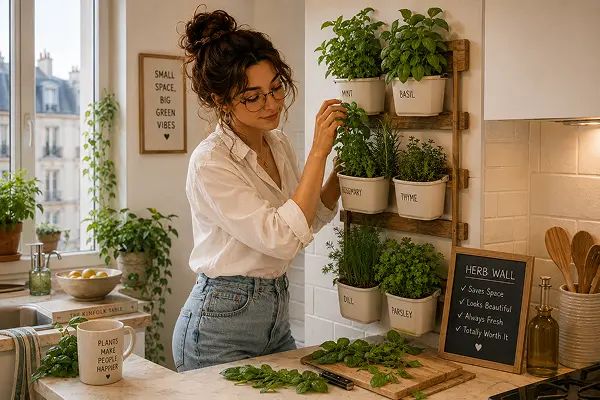
Learning how to install a vertical herb wall became my priority when I realized counter space in a small rental kitchen is precious and floor space is even more so. Floor space is even more so. But the walls? Walls are almost always completely ignored — and in a rental where drilling is forbidden, they feel impossible to use. What I discovered, after two failed attempts and one very understanding landlord, is that you don’t need a single screw to create a proper vertical herb wall.
Here’s what actually works — and what looks good while doing it.
Why Vertical Makes Sense in a Small Kitchen
A vertical herb wall solves several problems simultaneously. It reclaims counter space, puts herbs within arm’s reach while cooking, adds visual warmth to what’s often the most utilitarian room in a small apartment, and keeps your kitchen smelling extraordinary. In a rental, the constraint is avoiding permanent damage — and modern adhesive and freestanding solutions handle that completely.
There’s also a practical seasonal element worth planning for. Kitchen walls near a window can get noticeably colder in winter, especially in older rental buildings with less efficient glazing, and a herb wall positioned there may need shifting slightly away from the glass, or supplementing with a small grow light, once the weather turns.
Practical No-Drill Solutions for Rental Kitchens
Option 1: Adhesive hooks with hanging planters
Heavy-duty adhesive strips — the Command brand is reliable — can hold lightweight planters securely on tiles or painted walls. Use small pots under 500g when full, hung with jute cord for a natural, relaxed look. This was my first successful attempt, and the result was better than I’d expected.
Option 2: A freestanding ladder shelf
A slim wooden or metal ladder shelf takes up minimal floor space and holds multiple pots at different heights. No drilling, fully portable, easy to rearrange when you change your mind about the layout — which, in my experience, happens frequently. Style it with matching terracotta pots for a cohesive, intentional look.
Option 3: Magnetic planters on the fridge
Magnetic herb planters designed for refrigerators are one of the most space-efficient solutions available. They attach in seconds, hold small herb plants easily, and use a surface that’s already cluttered with magnets anyway. Worth trying before anything more complicated.
Option 4: A tension rod system
Install a tension rod across a kitchen window — no screws, no damage, completely removable — and hang small pots with S-hooks. This works particularly well for trailing herbs like mint or smaller chilli plants. The light from the window is an added bonus.
Step-by-Step: Building a Simple Adhesive Herb Wall
- Choose your wall — near a window or under kitchen lighting for best results
- Clean the surface thoroughly with alcohol wipes — this step is non-negotiable; adhesive won’t hold on dirty surfaces
- Plan your layout before sticking anything — stagger the pots at different heights for visual interest
- Apply adhesive hooks following the manufacturer’s instructions and wait the full recommended time before loading
- Use lightweight pots — terracotta is beautiful but heavy; consider plastic pots tucked inside wicker or ceramic sleeves
- Plant herbs in individual pots — different herbs need different watering, so sharing a container causes problems
Resilient Herbs for a Vertical Kitchen Wall
- Basil — needs good light; place closest to the window
- Chives — easy, grows back quickly after cutting, very forgiving
- Mint — vigorous, keep in its own pot to prevent it taking over
- Parsley — tolerates lower light, good for north-facing kitchens
- Thyme — compact, drought-tolerant, intensely fragrant
The Watering Question
The main challenge with wall-mounted herb setups is keeping water where it belongs. Use pots with built-in saucers, or place a small tray beneath each pot. Water lightly and more frequently rather than soaking deeply, and tip out any standing water after 30 minutes. Once you find the rhythm, it becomes genuinely easy.
Common Problems and How to Fix Them
Adhesive hooks failing is the most frequent complaint, and it’s almost always down to skipping the cure time. Most adhesive strips need 24 hours before bearing any weight, loading a planter too soon is the single biggest cause of a hook peeling off the wall, often taking a bit of paint with it. If a hook does fail, clean the wall thoroughly before trying a fresh strip in the same spot, old adhesive residue stops the new one from bonding properly.
Leggy, stretched-looking herbs usually mean the light is weaker than it looks. A spot that seems bright to your eye at midday can still be too dim for basil specifically, which is the fussiest of the common kitchen herbs about light. Parsley, chives, and mint tolerate this far better, so if one section of the wall keeps producing leggy plants, it’s often simpler to swap which herbs live there than to chase more light.
Herbs planted too close together compete for water and airflow, and mint in particular will out-compete anything sharing its pot within weeks. Keep each variety in its own container, even in a compact wall setup, it makes troubleshooting individual problems far easier.
Your Walls Are Waiting
A vertical herb wall changes how a kitchen feels — not just how it looks. The smell of fresh herbs as you cook, the small ritual of snipping what you need, the satisfaction of a wall that actually does something: these things are worth the initial effort.
Start with three herbs. See what thrives in your light and your rhythm. Build from there.
About Olivia
Olivia Knows Things is the editorial voice behind this blog, created to share practical, tested ideas that help people create beautiful, comfortable, and sustainable homes.