Finding a stylish and sustainable window treatment for a rental apartment can be a challenge. Windows in rental apartments almost always come with whatever outdated fixtures the landlord installed decades ago. In my personal experience across three different rental homes in Northern Europe, these setups are rarely what I would have chosen for myself. The design options for tenants are traditionally seen as more limited than for property owners, but the creative possibilities are actually far more varied than most people realise. Over the years, through trial and error, I have discovered brilliant, non-permanent interior solutions that provided absolute privacy, controlled harsh daylight, looked incredibly sophisticated, and came down cleanly when my lease ended, leaving zero wall damage while allowing me to pack everything up for my next move.
Sustainable window styling for tenants needs to balance three golden rules: it must rely on natural or organic materials, feature renter-friendly installation methods, and deliver a genuinely beautiful visual effect that elevates the entire room.
The Renter Constraint: Understanding Wall Rules
Most standard rental agreements across Europe strictly prohibit drilling holes into walls, ceilings, or wooden window frames. This widespread legal constraint immediately eliminates traditional, heavy curtain pole installations that require heavy-duty plastic wall plugs and screws. For a long time, this left tenants feeling trapped with boring vertical blinds.
Thankfully, clever hardware innovations have completely changed the game. The smart interior solutions that work beautifully within these legal boundaries include spring-loaded tension rods that fit snugly within the window recess using simple pressure, high-strength adhesive hooks rated specifically for fabric weight, minimalist curtain wire systems that require almost no invasive fixings, and innovative freestanding rail systems that elegantly stand beside or lean against the glass frame.
The Best Natural Materials for Eco-Friendly Window Styling
1. Pure Linen Curtains
Linen is undoubtedly the most elegant, durable, and sustainable curtain material available on the modern market. Derived from the resilient flax plant, which requires far less water and fewer pesticides to grow than conventional cotton, it is an environmental triumph.
For those seeking a sophisticated, airy aesthetic, pure linen curtains are the ultimate sustainable design choice. Linen is crafted from flax plant fibres, a highly resilient crop that requires significantly less water and fewer pesticides to cultivate than conventional cotton, making it a beautiful victory for the planet. Beyond its eco-friendly credentials, linen offers a highly-coveted texture that instantly softens industrial apartment spaces. Opting for affordable collections from global window textile retailers (specifically their pure linen ranges) allows you to achieve a high-end look on a budget while creating a beautifully organic backdrop that filters harsh sunlight into a warm, inviting glow.
2. Organic Cotton Voile and Muslin
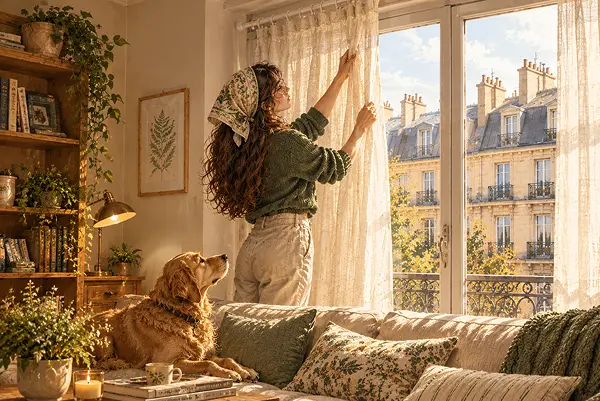
If your primary goal is to maximise light while blocking the view from nosy neighbours, lightweight organic cotton voile or fine muslin panels are your best friend. Hung directly against the glass, these translucent fabrics filter intense, direct afternoon sun and provide essential daytime privacy without blocking natural light entirely.
Because the fabric is so wonderfully lightweight, these panels move beautifully with the slightest summer breeze, creating a romantic, airy, and softly diffused atmosphere. When sourcing these textiles, look for certified organic cotton voile, which is readily available from specialty fabric retailers and ethical homeware brands focusing on non-toxic production.
3. Natural Bamboo and Rattan Blinds
Woven bamboo or rattan roller blinds are among the most stylish and renter-friendly window coverings you can buy. Bamboo is a fast-growing grass that requires zero chemicals to cultivate, making it a stellar ecological choice.
These blinds require minimal installation effort, often relying on a simple adhesive strip or tension-mounted clip brackets that hook over the top of movable European window frames. They bring a warm, rich, earthy texture to a room that soft fabric treatments simply cannot replicate. Woven blinds diffuse light rather than block it completely, casting beautiful geometric shadows across the room. This makes them absolute perfection for lively communal spaces like living rooms and kitchens, though they are less suitable for bedrooms where absolute darkness is required for deep sleep.
4. Jute and Seagrass Roman Blinds
For a sharper, more structured interior look, natural fibre Roman blinds crafted from woven jute or wild seagrass are spectacular. They offer the clean, tailored architectural lines of a traditional fabric blind combined with the rustic texture and organic warmth of earth-grown materials.
Jute blinds are inherently heavier and tighter in weave than bamboo, providing significantly better light control and insulation against window drafts when fully lowered to the sill. You can find beautiful, ethically handmade options from specialist sustainable home boutiques across the UK and mainland Europe.

Practical Installation Methods Without Using a Drill
To make your styling process seamless, here is a breakdown of exactly how to hang your new eco-friendly textiles without endangering your security deposit:
- Spring-Loaded Tension Rods: These clever bars sit entirely within the internal window recess with no screws or glue whatsoever. They use internal spring pressure to stay upright. They are perfectly suited for lightweight fabrics, including cotton voile, fine muslin, and sheer linen panels.
- Heavy-Duty Adhesive Hooks: Modern command hooks rated to support weights of 3kg or more can easily hold a lightweight wooden pole or a tight steel tension wire. This method is brilliant for hanging medium-weight linen or cotton curtains over wider windows.
- Freestanding Curtain Rails: These architectural systems sit on heavy, weighted floor bases. They require absolutely zero wall contact, making them ideal for historic rental apartments with delicate plaster walls.
- Clip-On Blind Brackets: Designed specifically for modern European tilt-and-turn windows, these clever metal clips clamp securely onto the top of the moving window frame using tension rather than drilling.
Light Control and Privacy: The Layered Approach
For small bedrooms that require excellent nighttime light blocking along with soft daytime privacy, a single window covering is rarely enough. The ultimate interior design hack for tenants is the layered approach.
By combining a natural bamboo roller blind mounted inside the recess for daytime use with a pair of lightweight pure linen curtains hung on a tension rod for evenings, you create a rich, tiered solution. This address both practical needs perfectly, looks incredibly expensive and high-end, and still requires absolutely zero permanent installation or structural alterations.
Windows That Feel Like Conscious Choices
As I write this, my trusty tension rod with its soft cotton voile panels is proudly up in my third rental apartment. It took me less than five minutes to take it down from my second home, it rolled neatly into a single canvas tote bag during moving day, and it went up in my new space in under twenty minutes.
The windows in all three of my apartments started out looking generic, cold, and entirely dictated by whatever cheap fixtures the landlords had left behind. By choosing natural textures and smart, non-invasive hardware, they all ended up looking like intentional, beautiful design choices. This simple approach transforms your home, much like learning how to build a vertical herb wall in a tiny rental kitchen without drilling.
My challenge to you this week is simple: take out a tape measure and gauge the width of your window recess. A basic tension rod and two metres of organic cotton voile costs under 20 euros in total, yet it completely transforms the quality of light, warmth, and privacy in your home.
About Olivia
Olivia is an interior design writer passionate about small-space living, sustainable home decor, indoor gardening, and practical, budget-friendly ideas that help everyday people create beautiful, eco-conscious, and comfortable homes.