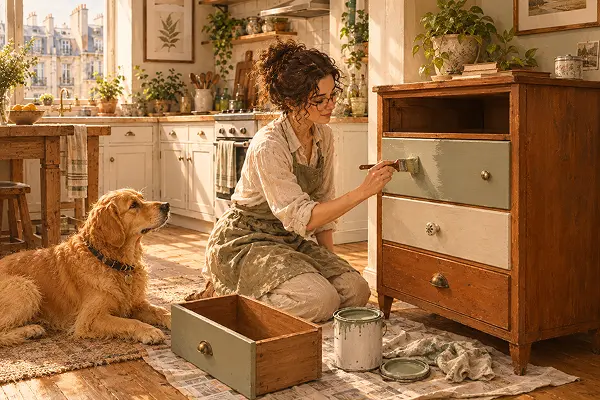
The chest of drawers came from a house clearance and cost twelve euros. It was a hideous shade of orange-brown that had probably been fashionable in the 1980s, and one handle was missing. Six hours, two tins of chalk paint, and a replacement handle later, it was the piece of furniture in the flat that people asked about most. That was the moment I understood what non-toxic furniture restoration actually means: not bringing something back to what it was, but making it into what you want, without spending three days airing out fumes afterward.
Why This Actually Matters
It’s a strange thing to think about, but something like 22 million pieces of furniture get thrown away in the UK every year, and a good third of that could have been reused instead of binned. My twelve-euro chest of drawers could easily have been one of them. Restoring old furniture isn’t just a weekend project; it’s a small, practical dent in a genuinely wasteful pattern, and it costs a fraction of buying new.
Why Non-Toxic Products Matter in a Small Apartment
Conventional paint, varnish, and wood treatments release VOCs (volatile organic compounds) that build up fast in a small, enclosed space. VOC concentrations indoors can run up to ten times higher than outdoors once you introduce products that off-gas which explains exactly why painting a dresser in a one-bedroom flat with standard products can make the whole space genuinely unpleasant to live in for days. Non-toxic alternatives, chalk paint, milk paint, natural oils and waxes, produce far lower VOC levels, and some produce almost none at all.
The Best Non-Toxic Products for Furniture Restoration
Chalk paint
The most accessible entry point for beginners doing non-toxic furniture restoration. Chalk paint adheres to almost any surface without sanding or priming, dries quickly, and produces a matte, chalky finish that can be distressed for an aged effect or sealed smooth. Brands like Annie Sloan (which popularised the category) and Rust-Oleum’s chalk range are widely available across Europe, and VOC content is significantly lower than conventional paint.
Milk paint
Made from milk protein (casein), lime, and natural pigments, milk paint is one of the oldest furniture finishes in existence. It’s completely natural, odourless, biodegradable, and produces a beautiful, slightly translucent finish that’s particularly striking on raw or previously unpainted wood. It needs more preparation than chalk paint, surfaces have to be clean and unsealed, but the result is worth it.
Natural wax and oil finishes
Beeswax, carnauba wax, and linseed oil are traditional wood finishes that protect and nourish wood without synthetic chemicals. They produce a low-sheen, natural-looking finish that enhances wood grain rather than obscuring it. Applied over chalk or milk paint, wax seals and protects while adding subtle depth. Applied directly to raw or stripped wood, oil and wax finishes are among the most beautiful and durable natural options available, the same reasoning behind choosing raw clay over glazed ceramics for a more natural material palette throughout a small home.
The Basic Restoration Process
- Clean the piece thoroughly with a damp cloth and let it dry completely
- Repair any damage: fill holes or scratches with natural wood filler, reattach loose joints with wood glue
- Sand lightly if you’re using milk paint or an oil finish on a previously painted surface; skip sanding for chalk paint on most surfaces
- Apply the first coat and let it dry fully (chalk paint dries within 30–60 minutes)
- Apply a second, thin, even coat for full coverage
- Seal with wax or a water-based varnish appropriate to your finish

Choosing Colours for Small Apartments
In a small apartment, furniture colour genuinely changes how the room feels. Lighter tones, off-white, pale sage, warm cream, make a piece feel less visually heavy and the room feel more open, the same logic that works well when layering organic cotton textiles into a small living room. A single piece in a deeper tone, dusty blue, terracotta, forest green, creates a focal point without overwhelming the space.
The Mistake Worth Avoiding
The first piece I ever restored, I skipped every prep step because I wanted to see the paint go on immediately. No cleaning, no sanding, no repair. It looked fine for about three weeks, then started chipping at every corner and edge, the paint had nothing to properly grip onto. Non-toxic furniture restoration is genuinely forgiving with materials, but not with shortcuts. The five minutes of prep work is the difference between a finish that lasts years and one that needs redoing by autumn.
The Twelve-Euro Chest of Drawers
It’s still there, still the most asked-about piece of furniture in the flat. The handles are mismatched, deliberately, and the finish has worn slightly at the corners from years of use. These imperfections are now part of what makes it look right: genuinely old, genuinely used, genuinely not from a catalogue.
Find a piece of secondhand furniture this weekend. Choose a colour, choose a non-toxic product to work with, and give it a few hours. The rest is simpler than you expect, and it’s one less piece added to that pile of 22 million.
About Olivia
Olivia Knows Things is the editorial voice behind this blog, created to share practical, tested ideas that help people create beautiful, comfortable, and sustainable homes.