

There is a specific kind of November morning in northern Europe when you step onto the balcony with a warm mug in hand, feel that sudden, sharp bite in the air, and realize protecting balcony fruit trees can no longer wait. Unlike garden trees whose roots stretch deep into insulated earth, potted trees sit suspended in the cold, exposed to freezing wind from every angle. A few simple, thoughtful layers now can save their roots before the first deep freeze arrives.
Why Balcony Containers Feel the Cold First
When you grow fruit trees in an open garden, the surrounding soil acts like a thick wool blanket, holding onto residual warmth even when frost coats the grass. On an apartment balcony, though, your tree’s entire root system lives inside a narrow cylinder of potting mix surrounded by icy air on all sides, and often resting on freezing concrete or stone tiles underneath.
When temperatures dip below zero for several nights in a row, moisture inside that pot turns into expanding ice crystals. Those tiny crystals press against and damage the delicate feeder roots responsible for drinking water and nutrients. Often, when a balcony fig or citrus struggles in spring, the culprit wasn’t the cold wind brushing its branches, it was roots that froze solid while the tree was dormant.
Protecting balcony fruit trees comes down to two cozy, practical habits: wrapping the container like you would bundle up for a brisk walk, and matching your winter routine to what each tree naturally expects.
Bundling Up Your Pots: Simple Insulation That Works
According to preventing winter damage advice from the Royal Horticultural Society (RHS), insulating the container itself makes the biggest difference when overwintering woody plants outdoors. Instead of complicated structures, a few everyday materials create a gentle buffer against sudden temperature swings:
- Lift pots off freezing floors: Terracotta and ceramic conduct cold straight up from concrete balcony tiles. Sliding wooden plant caddies, terracotta pot feet, or thick cork mats underneath breaks that icy bridge immediately.
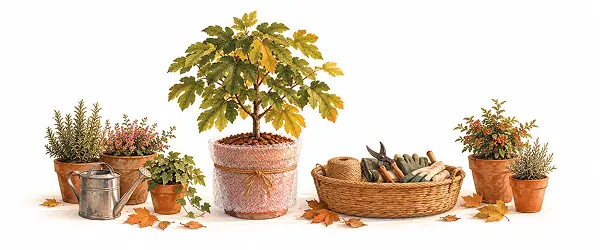
- Wrap the container walls: Before hard frosts settle in, wrap the outside of each pot in two or three layers of bubble wrap or breathable hessian (burlap), tying it neatly with natural jute twine. Keep the bubble wrap strictly around the pot, never over the leaves, so trapped air pockets insulate the soil while the branches still breathe freely.
- Tuck in the topsoil with mulch: Spread a generous, four-inch (10 cm) layer of pine bark, wood chips, or clean straw across the soil surface. It looks tidy, holds moisture steady, and keeps the top layer from freezing into a hard crust.
- Huddle containers against a warm wall: Move your pots close together against the sheltered wall of your apartment building. Brick and stone walls quietly radiate a little leftover warmth from your indoor heating while blocking the sharpest north winds.
Matching Winter Care to Each Fruit Tree
Every fruit tree brings its own personality to winter. If you are still choosing varieties or planning your container layout, our guide on growing mini fruit trees in pots for apartment balconies walks through the best compact rootstocks for small spaces. Once your trees are settled in, divide them into three simple winter routines:
Bringing Tender Citrus Into the Warmth
Subtropical citrus trees, like dwarf Meyer lemons, calamondins, and kumquats, simply aren’t built for prolonged frost. As soon as autumn nights begin flirting with freezing temperatures, it is time to invite them indoors.
Set them near your sunniest south- or west-facing window, keeping a comfortable distance from radiators that blow dry heat onto their glossy leaves. Because winter heating turns apartment air dry, resting the pot over a shallow tray of wet pebbles or running a small humidifier nearby helps prevent sudden leaf drop. Hold off on fertilizer until fresh green shoots appear in March.
Cozying Figs and Olives Outdoors
Established dwarf figs (such as ‘Brown Turkey’) and Mediterranean olive trees are far tougher than their sunny origins suggest. Once dormant, they can usually handle brief dips down to around -8°C to -10°C as long as their roots are well insulated.
Keep their wrapped pots pressed close to your warmest balcony wall. When a deep cold snap is forecast, follow the RHS overwintering wrapping guidelines by draping lightweight, breathable white horticultural fleece loosely over the canopy and tying it softly around the trunk. Unlike solid plastic, horticultural fleece softens biting wind while still letting pale winter daylight filter through.
Letting Apples and Pears Enjoy Their Winter Nap
Dwarf patio apple and pear trees grafted onto compact rootstocks actually look forward to the cold. They rely on a certain number of winter “chill hours” to reset their internal clocks and reward you with abundant spring blossoms.
Moving them into a heated living room only confuses their rhythm. Leave hardy apples and pears outside all winter, focusing your care on wrapping the pot and mulching the roots so freeze-thaw cycles don’t crack the container.
Three Quiet Winter Mistakes to Avoid
Winter plant care asks us to slow down right alongside the trees. Most cold-weather setbacks happen when lively summer habits sneak into January:
- Watering on a summer schedule: Dormant trees drink very little. Pouring water into cold soil leaves roots sitting in chilly, soggy mud without oxygen. Before reaching for the watering can, press your index finger two inches (5 cm) into the potting mix, if it feels cool and slightly damp, wait another week.
- Assuming cold means wet: Even in winter, bright, breezy afternoons dry out soil faster than expected, especially for evergreen olives and indoor citrus. Checking the soil every two weeks during dry spells keeps roots from dehydrating silently.
- Wrapping leaves in plastic: Clear plastic over foliage traps daytime condensation that can freeze against the leaves at night or invite fungal spots. Save bubble wrap for the pot walls and stick to breathable fleece up top.
Taking half an hour on a crisp November afternoon to wrap your pots, tuck in fresh mulch, and move tender citrus toward a sunny window feels less like a chore and more like putting your balcony to bed for the season. When April sunshine returns and the first pale blossoms open outside your glass door, your trees will wake up rested and ready to grow.
About Olivia
Olivia is an indoor gardening enthusiast and remote worker based in Europe. She shares practical, elegant, and sustainable solutions for maximizing life in small apartments and compact home offices.