If you want to care for succulents dry city apartment environments safely, understanding indoor humidity is the crucial first step. I spent my first winter renting a dark northern European apartment mourning four dead desert cacti. I watered them constantly, assuming the dry radiator air meant they were parched. It was a disaster. It turns out that successful succulent care in low winter light requires a complete structural shift. Understanding how stagnant indoor air and low light interact is the real secret to keeping your green companions alive until spring.
Once I took the time to understand what these desert specimens actually need, which is fundamentally different from the care habits most traditional houseplants demand, they instantly transformed into the most rewarding, low-maintenance green companions in my home. Shifting your approach doesn’t require an indoor greenhouse. By altering a few basic environmental variables, you can keep desert flora thriving on a very tight budget.
Why Winter Apartments Challenge Desert Flora
Modern city apartments don’t lack warmth during the cold months. Central heating keeps our living spaces remarkably stable. However, this artificial warmth creates a deceptive environment for low-light indoor gardening.
While radiators dry out the air—which desert species generally enjoy—the lack of open windows stops air circulation. Your plants stop growing actively. Their metabolic processes slow down to a near-dormant crawl.
When you pour water into a pot sitting in a closed, stagnant room, the soil stays damp for weeks. Without intense sun to trigger evaporation, that moisture traps the root system. It is the lack of air movement, not just the water itself, that turns soil sour.
Light Requirements for Balanced Growth
Bright, direct light is a non-negotiable structural requirement for almost all desert flora. Most common varieties require at least four to six hours of direct sunlight daily to maintain their compact shapes and vivid color tones.
- Optimal Window Placement: A south or west-facing windowsill is the ideal position to maximize daylight exposure during winter months.
- The East and North Window Dilemma: North-facing window tracks are generally insufficient for desert plants, causing them to etiolate. This means the plant will aggressively stretch its stem toward the nearest light source, weakening its core structure and losing its compact aesthetic.
- Shade-Tolerant Alternatives: If your apartment layout only features low-light windows, prioritize shade-flexible genera such as Haworthia or Gasteria. These varieties feature deep green, thick leaves designed to filter low light efficiently without losing their structure.
- Supplementary Grow Lights: For darker winter rooms, a small desktop LED grow light positioned roughly fifteen centimeters above the containers can supplement natural deficiencies beautifully for a very minor investment.
Surviving the Low-Light Winter Slump
When daylight hours drop, your immediate indoor gardening goal must shift from forcing active growth to encouraging safe preservation. You cannot treat a grey December afternoon like a bright July morning. If your apartment window tracks lack direct solar radiation, a few tactical adjustments will safeguard your collection until the spring equinox.
The Winter Water Pause
Cut your watering frequency immediately. If your summer routine involved drenching the soil every two weeks, your winter interval should stretch to four or six weeks. Only offer water when the lowest leaves show slight wrinkling.
Parapeit Proximity
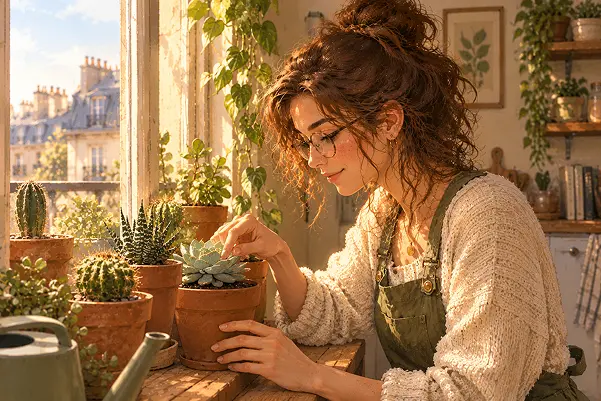
Every single centimetre away from the glass reduces light intensity exponentially. Move your containers directly onto the windowsill structure. Just ensure the fleshy leaves do not physically touch the freezing window panes during cold nights.
Dust Mitigation
A thick layer of city dust acts like a curtain over your plants. It blocks the minimal light available from reaching the chlorophyll cells. Use a soft, dry makeup brush to gently clean the rosettes every fortnight.
The Growth Embargo
Never fertilize your desert plants between November and March. Forcing new growth when light is insufficient results in weak, pale, and irreversibly stretched stems. Let them rest in the dark.
The Soak-and-Dry Watering Routine
The absolute golden rule for indoor desert gardening is to discard traditional calendar schedules entirely. Instead, rely strictly on the moisture level of your growing medium using the classic soak-and-dry method. This routine mimics natural desert downpours and prolonged dry spells, which encourages deep, resilient root stabilization.
- Drench Thoroughly: Pour water evenly across the soil surface until it flows freely out of the container’s bottom drainage holes.
- Dry Completely: Allow the growing medium to lose 100% of its moisture before offering another drop. Verify this by pushing a finger three centimeters down into the core soil; if any dampness or coolness is detected, wait a few more days.
- Seasonal Transitions: During active summer growth, this typically means a gentle drenching every ten to fourteen days. In contrast, during dark winter dormancy periods, your plants may only require attention once a month, or even less if your rooms stay cool.
- Clear the Saucers: Never allow a pot to sit in standing water inside a decorative tray. Accumulated water blocks oxygen from reaching the roots, causing the soil to turn sour. Always empty structural saucers within thirty minutes of watering.
Strategic Potting Mixes and Container Selection
Standard commercial potting soil is engineered to retain water, making it incredibly dangerous for indoor succulents. To protect your collection, you must utilize an open, coarse medium that sheds water instantly. You can easily blend an eco-friendly mix on your kitchen counter by combining fifty percent standard organic potting soil with fifty percent coarse sand, washed gravel, or porous horticultural perlite.
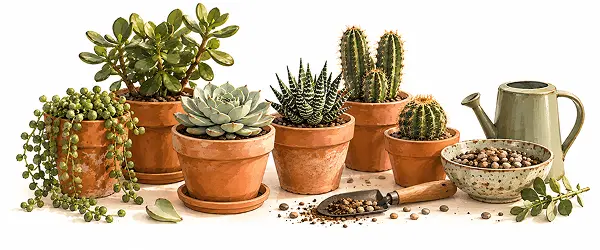
Your choice of container material plays an equally critical role in moisture regulation. While glazed ceramic and plastic pots look modern, they trap moisture inside the root zone for weeks. Heavy, porous natural terracotta pots are significantly better for desert varieties on a sustainable budget. Terracotta breathes naturally, allowing excess moisture to evaporate cleanly through the clay sidewalls, which protects the root zone from accidental overwatering.
Ideal Compact Varieties for Urban Spaces
When sourcing new additions for your window display, prioritize compact varieties that integrate smoothly into small rooms without outgrowing their shelves, a practice highlighted in the Royal Horticultural Society Indoor Cultivation Guide for limited spaces:
- Echeveria: These gorgeous, rosette-forming specimens offer stunning architectural geometric shapes and handle indoor dryness beautifully, provided they sit directly on a sunny ledge.
- Haworthia (Zebra Plant): Incredibly hardy and visually striking with clear white stripes, these are the ultimate low-light apartment succulents for interior shelves.
- Gasteria (Ox Tongue): Exceptionally compact and slow-growing, these textured plants feature thick, tongue-shaped leaves that tolerate low light levels and dry indoor air with remarkable resilience.
- Crassula Ovata (Jade Plant): An incredibly long-lived, traditional variety that gradually develops a beautiful, tree-like miniature woody trunk over the years with minimal care.
- Sedum (Stonecrop): Perfect for narrow spaces, these varieties cascade elegantly over the edges of shallow containers, catching the morning light across windowsills.
Diagnosing Common Problems Early
When a desert plant begins to struggle, acting swiftly can easily save its life before permanent structural damage occurs. Understanding these two common warning signs will keep your collection safe:
Soft and Mushy Stems
If the lower leaves turn translucent, yellow, or mushy at the base, it is a definitive symptom of root rot caused by stagnant water. To save the specimen, remove it from the pot immediately and shake off the wet soil. Utilizing a clean knife, cut away any dark, damaged root tissue. Allow the healthy top portion of the plant to dry on a clean paper towel for a few days until a dry callus forms over the cut, then repot it into a gritty, fresh mix inside a clean clay pot. This open-air healing method aligns with the container gardening safety frameworks detailed in the UF/IFAS Extension Succulent Propagation Manual.
Pale, Stretched Stems
If your succulent begins to lose its tight, colorful rosette form and starts growing rapidly upward with wide gaps between individual leaves, it is signaling a desperate need for more light. While the already-stretched stem will not revert back to its original compact size, you can easily halt the process by moving the container to a brighter window ledge. Over time, the new growth at the very top will emerge thick, compact, and healthy, allowing you to carefully trim and propagate the healthy top section into a separate container later. For a clean look, these small calloused trimmings can be beautifully root-started inside upcycled glass containers, mirroring the steps to repurpose glass jars as apartment planters on your windowsill.
Sustainable Longevity on a Budget
Stepping back and letting these resilient desert specimens operate on their own evolutionary terms is the real secret to indoor horticulture. Once you shift your approach from active propagation to mindful preservation, apartment gardening becomes an incredibly peaceful, hands-off joy.
Give your collection access to the absolute brightest window ledge available, dust their leaves periodically, and drop your watering frequency to match the grey winter sky. By treating the winter months as a time for quiet rest rather than forced growth, your indoor oasis will cross the spring threshold thick, vibrant, and beautifully intact.
About Olivia
Olivia is an international lifestyle and home styling writer dedicated to small-space efficiency, sustainable interior ergonomics, mindful consumer habits, and practical eco-friendly decor that helps modern professionals build healthy, beautiful, and intentional homes.