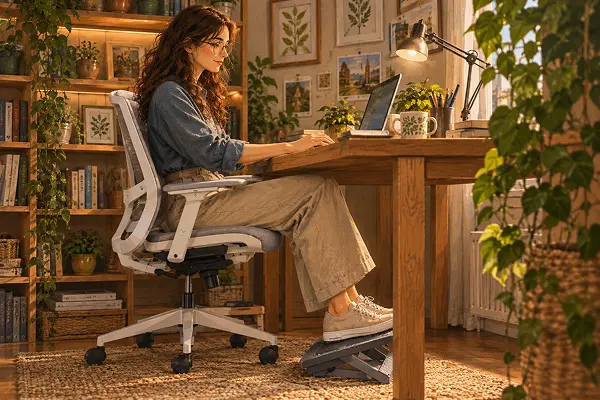
Standard office desks sit at a fixed height designed for an average build, which often forces remote workers to raise their chairs just to align their forearms with the keyboard. When that happens, your feet end up dangling or resting on tiptoes—a subtle misalignment that pulls on your lower back all day. According to workplace health guidelines from the Mayo Clinic, continuous lower back tension is frequently triggered by poor postural support, making ergonomic footrests a simple, high-impact fix.
The Kinetic Chain and Why Foot Support Dictates Spine Health
A dedicated footrest is routinely dismissed as one of the least glamorous home office investments. In reality, it remains one of the most effective tools for remote professionals whose heels fail to plant firmly on the floor. When your lower limbs are left suspended, your body instinctively compensates in subtle, destructive ways that travel upward through your entire kinetic chain.
Dangling feet create continuous, low-level muscle tension in the back of your thighs. Conversely, resting only your tiptoes on the ground causes your calf muscles to tighten over long hours. Both of these seemingly minor postures alter your pelvic tilt. This structural misalignment directly impacts the natural curvature of your lumbar spine. A poorly supported foot position is a shockingly common contributor to chronic lower back pain that persists despite owning a premium ergonomic chair. If you are still trying to find the perfect seating backbone for your setup, make sure to read our comprehensive guide on selecting an ergonomic office chair to align your entire body correctly.
Assessing Your Workstation: Who Actually Needs a Foot Platform?
Not every remote worker requires a footrest to stay healthy. If your feet naturally rest flat and comfortably on the floor while your hips are pushed back into the seat, an extra platform adds zero biomechanical value.
However, you should absolutely introduce a footrest if you meet any of these specific criteria:
- The Desk Height Gap: Your chair must be raised significantly to let your elbows comfortably reach your keyboard, lifting your heels off the ground.
- Petite Frame Challenges: You are shorter than average build, and standard mass-produced desks leave a noticeable gap between your feet and the floor.
- Persistent Muscle Fatigue: You experience recurring tightness in your lower back, hamstring muscles, or calves despite adjusting your chair backrest perfectly.
Exploring the Varieties of Home Office Footrests
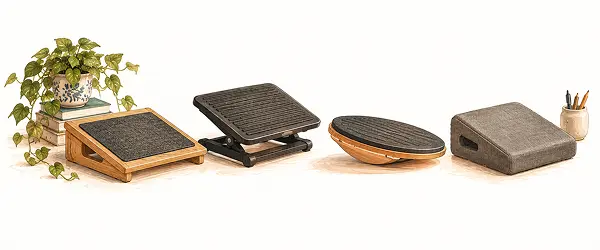
Fixed-Height Utility Platforms
This is the simplest and most accessible option on the market. A fixed-height footrest features a solid, angled platform that supports your feet in a stable position. While these models are highly effective and budget-friendly, typically ranging between $15 and $30, they offer zero custom adjustability. They work best if you already know your ideal height requirements and do not share your home office space with anyone else.
Adjustable-Height Dynamic Models
These versatile structures allow you to mechanically alter the platform height, typically ranging between 2 and 6 inches. This adaptability easily accommodates different footwear styles, varying seating positions, or multiple users throughout the day, aligning with the official workstation metrics provided by the OSHA Ergonomics Assessment standards. They represent the most practical investment for the vast majority of modern home offices. Trusted industry options like the Kensington SoleMate or the Fellowes Professional Series offer excellent durability within the $40 to $75 price range.
Rocking and Tilting Footrests
Footrests equipped with a built-in rocking or smooth tilting mechanism actively encourage gentle foot and ankle movement while you type. This continuous subtle motion significantly improves blood circulation in your lower legs during prolonged sitting sessions. The intentional slight instability also activates your core stabilizing muscles at a very low, non-fatiguing level. These models are exceptionally beneficial for remote workers who frequently suffer from cold feet or a heavy sensation in their legs by mid-afternoon.
Active Balance Boards
Stepping entirely beyond traditional seated options, balance board footrests encourage more pronounced lower leg engagement. These active platforms are primarily engineered for standing desk users who want to safely shift their weight and introduce healthy movement while remaining upright, rather than for standard seated tasks.
Creative Temporary DIY Alternatives That Actually Work
Before pulling out your credit card to purchase a dedicated professional model, you can easily test the ergonomic benefits using common household items. A firm yoga block, a tightly stacked bundle of heavy coffee table books, or a sturdy wooden storage box can serve the exact same mechanical purpose.
If your improvised household solution noticeably relieves your back tension within a week, investing in a dedicated, adjustable model is entirely worth it. However, if the temporary mock-up fails to change your comfort levels, a purchased version will not solve the issue either. The trial period costs nothing and saves you from unnecessary clutter.
The Foundation of Your Remote Workday Comfort
The complete ergonomic chain runs sequentially from your feet through your hips, moving up the spine to your shoulders, neck, and head. Unfortunately, the vast majority of mainstream work-from-home advice focuses exclusively on the upper body. Content creators constantly lecture about computer screen heights, keyboard positioning, and chair lumbar cushions.
Yet, your feet and lower legs constitute the absolute foundation of this entire physical system. Take a quick moment to check your posture right now as you read this. If your feet are not fully supported and resting flat, a strategic footrest is the most affordable, high-impact health correction you can make for your body this month.
Medical Disclaimer: The ergonomics and posture information presented in this article is intended strictly for general educational and workplace comfort purposes. It does not constitute professional medical advice, diagnosis, or treatment. Always consult with a qualified healthcare provider or physical therapist regarding any persistent muscle pain, chronic lower back conditions, or before starting any therapeutic physical routine.
About Olivia
Olivia is an indoor gardening enthusiast and remote worker based in Europe. She shares practical, elegant, and sustainable solutions for maximizing life in small apartments and compact home offices.