
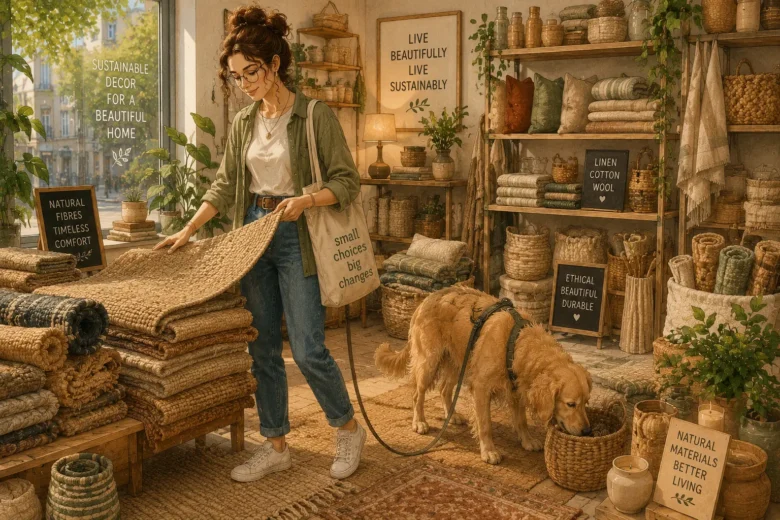
Finding sustainable flooring for renters can feel impossible when the floor in your current rental apartment is a dated laminate that has aged poorly. I cannot replace it. My lease is clear on the subject of structural changes, and flooring absolutely qualifies. What I discovered over two years of living with it is that you can transform the experience of a floor entirely without touching it, using rugs, natural textiles, and a few considered choices that cost considerably less than the renovation I am not permitted to do.
Sustainable flooring for renters is not about the floor itself. It is about what you put on top of it.
Why the Floor Matters More Than We Acknowledge
The floor is the largest surface in any room and the one closest to daily life: feet, children, pets, dropped things, bare skin in summer. A floor that looks wrong or feels unpleasant underfoot affects the perception of the entire room. Covering it with natural materials changes the room’s sound quality, temperature, and atmosphere in ways that wall decoration and furniture cannot replicate.
For renters specifically, there’s a practical bonus worth mentioning: a good rug setup travels with you. Unlike paint or flooring changes that stay behind when the lease ends, a well-chosen natural fibre rug collection moves to the next apartment and adapts to a new room, making it one of the few renter-friendly investments that pays off across multiple homes rather than just the current one.
High-Quality Natural Rug Materials for Rental Apartments
Jute
Jute is among the most sustainable natural fibres available, fast-growing, requiring minimal water and no pesticides, and fully biodegradable. Jute rugs have a warm, golden-brown tone that works with most interior palettes and a texture that reads as intentional and considered. They are best suited to low-traffic areas and living rooms rather than high-moisture areas like kitchens or bathrooms.
Sisal
More durable than jute, sisal handles moderate foot traffic well and has a slightly finer, more uniform texture. Natural sisal comes in tones from pale cream to warm tan and can be used throughout an apartment including hallways. Its main limitation is that it feels harder underfoot than wool or cotton rugs, which some people find uncomfortable in bare feet.
Wool
The most luxurious natural rug material and the most durable. A quality wool rug handles heavy traffic, cleans well, is naturally flame-resistant, and lasts decades rather than years. Wool rugs from ethical producers (look for Woolmark certification or rugs made in countries with strong animal welfare standards) are a genuinely sustainable choice at a higher price point.
Cotton
Flat-woven cotton rugs are washable in a domestic machine, which makes them practical for kitchens and dining areas where spills are frequent. Organic cotton eliminates the pesticide concerns associated with conventional cotton farming. They are thinner and less insulating than pile rugs but far more practical in food-adjacent areas.
Layering Rugs for Impact and Warmth
Layering a smaller, more decorative rug on top of a larger natural fibre base rug creates the appearance of a more considered floor treatment and adds warmth and sound absorption that a single rug of the same total area does not provide. A large jute rug as a base layer with a smaller vintage or colourful rug layered on top is one of the most effective and inexpensive floor transformations available to renters.
Rug Pads: Worth the Investment
A natural rubber or felt rug pad beneath any rug on a hard floor prevents slipping, protects the floor from friction, adds underfoot cushioning, and extends the life of the rug by preventing wear from the floor surface below. A quality rug pad for a medium-sized rug costs 20-40 euros and is genuinely worth the investment.
Caring for Natural Fibre Rugs So They Last
Natural fibres behave differently from synthetic ones, and treating them the same way shortens their life considerably. Jute and sisal should never be wet-cleaned with water alone, both fibres absorb moisture readily and can develop mould or discolouration if they don’t dry completely and quickly. For spills, blot immediately with a dry cloth rather than rubbing, and use a specialist natural-fibre cleaner rather than a general carpet solution.
Wool is more forgiving with moisture but still benefits from prompt attention to spills, a wool rug’s natural lanolin actually gives it some inherent stain resistance, though this fades with repeated harsh cleaning. Vacuum wool and cotton rugs regularly using a setting without a rotating brush head, which can pull at natural fibres over time, particularly on flat-weave cotton.
Rotating a rug 180 degrees every few months evens out wear from sunlight and foot traffic, especially important for jute and sisal in a spot that gets direct sun, both fibres can fade unevenly if left in exactly the same position for years. A rug that’s cared for this way will comfortably outlast several cheaper synthetic replacements, which is part of what makes the higher upfront cost genuinely sustainable rather than just aesthetically preferable.
The Floor You Did Not Choose
The dated laminate is still there, doing what it has always done. Over it: a large jute rug in the living area, a washable cotton flat-weave in the kitchen, a small wool rug beside the bed. The floor I did not choose has become almost invisible beneath the floor I did.
Measure your main room. Find a large natural fibre rug in a neutral tone that fits. This single addition will change more than any other renter-friendly intervention available.
For more, Natural Candles and Scents for a Chemical-Free Small Rental Apartment
About Olivia
Olivia Knows Things is the editorial voice behind this blog, created to share practical, tested ideas that help people create beautiful, comfortable, and sustainable homes.