
Compact Composting Solutions for Small Apartments Without a Garden
Learning how to compost in small apartments is not only entirely possible but also remarkably easy, requiring no outdoor space, creating no messy leaks, and producing almost zero foul odors. Living in a small, north-facing Paris apartment, traditional backyard composting piles or bulky rotating bins were completely out of the question. I assumed urban composting was a luxury reserved strictly for people with sprawling suburban gardens or spacious sunny terraces. However, after researching modern container solutions and running a few clean trials right on my kitchen counter, I discovered that transforming organic waste into rich soil nutrients inside an apartment is not only entirely possible but remarkably simple. It requires zero outdoor square footage, creates no messy liquid leaks, and produces absolutely no foul odors.
With global urban populations rising, standard commercial landfill disposal causes organic waste to decompose without oxygen, directly producing harmful methane gas. The average European household produces between 70kg and 100kg of food waste annually. Composting at home cuts your personal carbon footprint drastically and provides a continuous, cost-free supply of nutrient-dense organic fertilizer for your houseplants, eliminating the ongoing expense of buying plastic-packaged commercial potting soils.
The Most Efficient Composting Methods for Tight Living Spaces
- Bokashi fermentation systems: This traditional Japanese indoor setup is arguably the most practical option for small apartment kitchens. Unlike standard composting, Bokashi relies on an airtight, specialized bucket and wheat bran inoculated with beneficial microbes to ferment organic matter anaerobically. Because the system is completely sealed, it creates absolutely no rotten smells, producing only a faint, sweet pickled aroma when opened. A massive benefit of Bokashi is its versatility: because the food is fermented rather than decomposed, you can safely add cooked food scraps, cheese, dairy, small meat fragments, and fish bones that would instantly ruin a traditional garden compost pile. If you want to see how to seamlessly integrate an aesthetic Bokashi bucket into a tight cooking zone, check out our guide on how to Assemble a Sustainable Capsule Kitchen Using Only Natural Materials.
- Modern worm composting (Vermicomposting): If you want to actively create rich, crumbly soil right inside your apartment bedroom or utility closet, a compact worm bin is an exceptional choice. Specialized indoor vermicomposting kits utilize stackable, shallow plastic trays and a colony of red wiggler worms (Eisenia fetida) to break down raw fruit and vegetable peels. When managed correctly with the right balance of dry shredded cardboard and moist food scraps, a worm bin is entirely odorless. The result is pure, high-grade worm castings, often referred to by indoor gardeners as “black gold” due to its incredible ability to boost houseplant root health and immunity.
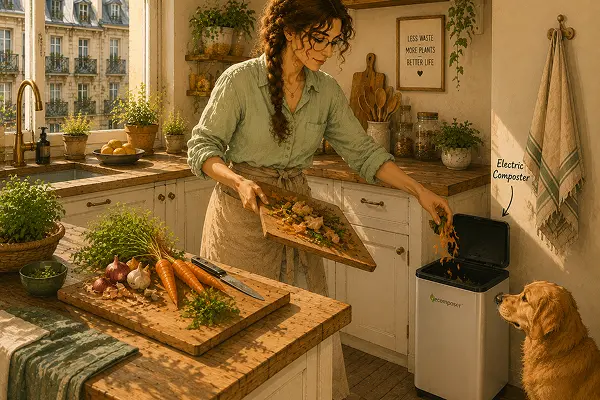
- Smart electric countertop composters: For tech-focused apartment renters with a flexible home budget, automated electric composters like the Lomi or Haro units are a game-changing addition. These sleek, high-tech appliances sit directly on your kitchen countertop, using internal heat, mechanical grinding blades, and carbon filters to dehydrate and break down daily food waste into a sterile, dry pre-compost powder in less than four to eight hours. It completely eliminates fruit flies and wet mess. For a deeper look into the strict legal frameworks surrounding domestic organic waste treatments across Europe, you can consult the official European Environment Agency guidelines on bio-waste management.
- The freezer collection method: If you simply do not want any active biological processing happening inside your living quarters, the freezer method is your best strategic alternative. Keep a dedicated, airtight silicone bag or plastic container in your freezer drawers and drop your vegetable peels, coffee grounds, and fruit scraps directly inside after cooking. Freezing halts all cellular decomposition, meaning zero smell, zero liquid, and zero flies. Once the container is full, you can easily carry the frozen block to a local community allotment, a neighborhood shared garden, or your city’s municipal brown bio-waste collection bins during your weekly walk.
What to Compost and What to Avoid in Small Systems
- Items to always compost: Raw fruit peels, vegetable ends, eggshells, coffee grounds, paper tea bags, unprinted brown cardboard scraps, and dried indoor plant clippings.
- Items reserved strictly for Bokashi buckets: Cooked meal leftovers, hard cheeses, citrus peels, meat scraps, and small chicken or fish bones.
- Items to avoid in all small systems: Heavy cooking oils, liquid grease, large animal bones, dog or cat pet waste, glossy colored magazines, and diseased houseplant leaves.
Designing a Seamless Routine for Long-Term Success
The secret to maintaining an indoor urban compost setup without frustration is starting incredibly small. Do not try to manage a massive worm colony on your first week; start with a compact, 5-liter Bokashi bucket or a simple freezer collection bag to build the daily habit of separating your scraps. For creative ideas on how to safely utilize your fresh, homemade organic compost to boost your container crops, read our popular guide on how to Keep Indoor Plants Alive in a North-Facing Apartment Window. You can also read our published post on how to Decorating With Indoor Terracotta Pots on a Sustainable Budget to see why raw clay is the ultimate container material for regulating soil moisture.
Investing a tiny bit of physical effort into selecting a clean, compact indoor composting system rewards you with a healthier home environment and thriving plants. More importantly, taking charge of your own household waste in a dense city environment feels like a genuine act of creative independence and a step toward a more conscious lifestyle.
About Olivia
Olivia Knows Things is the editorial voice behind this blog, created to share practical, tested ideas that help people create beautiful, comfortable, and sustainable homes.