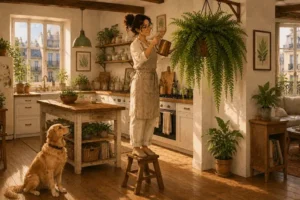
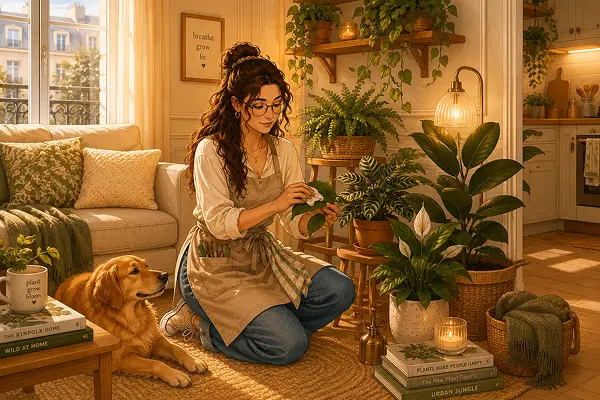
Designing a calming plant corner becomes essential in a studio apartment where every surface does multiple jobs. The desk is also the dining table. The sofa is also the reading chair. The bedroom is also the living room. Creating a plant corner in this context isn’t just about adding greenery, it’s about carving out one small part of the room that feels intentional, calm, and unhurried. A corner that isn’t trying to be anything other than what it is.
I built mine during a particularly overwhelming period at work, and I still think it’s the most effective thing I’ve done to change how that flat felt.
Why Grouping Plants Works Better Than Scattering Them
Single plants dotted around a small apartment can look sparse and slightly sad. Grouping plants together creates a sense of abundance, allows you to build a specific atmosphere in one area, and has practical benefits, grouped plants increase local humidity and create a more stable microclimate for each other. It also means your care routine is concentrated in one spot, which makes it easier to maintain.
Choosing Your Corner
Look for a space that has some natural light, ideally within 2–3 metres of a window. A dead corner behind a sofa, an awkward gap between a bookcase and the wall, or a nook beside a window all work well. The goal is to use space that isn’t currently serving another purpose effectively, space the room has but isn’t using.
If the only available corner gets very little natural light, this does not rule the idea out, it just changes which plants belong there. ZZ plants, cast iron plants, and snake plants tolerate low light well and still work within the same tiered structure, so the technique holds even when the light does not cooperate.
Building Layers: The Secret to a Plant Corner That Looks Considered
The most visually interesting plant corners use different heights to create depth. Think of it in three tiers, built outward from the floor:
Tier 1 — The floor layer
One or two larger statement plants directly on the floor, a fiddle leaf fig, a large monstera, an areca palm, or a tall dracaena. These anchor the corner and provide height. Choose one and let it dominate; two competing large plants fight for attention.
Tier 2 — The mid-level
A small side table, a plant stand, or a wooden stool holding medium-sized plants at various heights. This is where you add variety, different leaf shapes, different pot sizes, different textures. Let it feel slightly collected rather than perfectly matched.
Tier 3 — The top or trailing layer
A trailing plant on a high shelf, pothos, string of pearls, or heartleaf philodendron, cascading downward, or a small hanging planter near the ceiling. This draws the eye upward and makes the ceiling feel higher than it is.
Plants That Create a Calm Atmosphere
For a genuinely restful corner, lean toward soft shapes and deep greens rather than spiky or dramatic varieties:
- Calathea — patterned leaves that move gently throughout the day, visually meditative
- Peace lily — elegant white flowers, purifies air, prefers shade
- Boston fern — lush and full, the most classic ‘calming’ plant I know
- Pothos — easy, trailing, connects the different levels of the corner
- Rubber plant — bold glossy leaves, strong presence without being aggressive
The Details That Elevate a Plant Corner
- Choose pots in a consistent palette, terracotta, white, or earth tones create cohesion without effort
- Add a small warm-toned lamp nearby, plants look beautiful under warm light in the evening, and it extends the use of the corner into the night
- Include one textural element, a woven basket, a smooth stone, a piece of driftwood at the base of a large plant
- Keep it tidy, dead leaves and dusty pots undo the calm immediately
Keeping the Corner Looking Considered Over Time
A plant corner looks effortless in photos, but it does ask for a little rhythm to stay that way. Once a week, turn each pot a quarter turn toward the light source, plants grow toward it unevenly otherwise, and a corner with everything leaning the same direction stops looking intentional and starts looking neglected.
Growth changes the balance of the tiers faster than people expect. A mid-level plant left unchecked for a year can outgrow the floor-level anchor plant, and the three-tier effect disappears. Repot or prune back the fastest growers every six months or so, and don’t be afraid to move a plant up or down a tier as it changes size, the arrangement is meant to shift with the plants, not stay fixed forever.
Dust is the detail people forget most. Glossy leaves, on a rubber plant or monstera especially, catch dust quickly in a way that flattens their colour and dulls the whole corner. A soft, damp cloth once every couple of weeks keeps the leaves genuinely glossy rather than just green.
A Corner That Works for You
In a small apartment where every corner works hard, a plant corner is the one that works for you emotionally rather than practically. It’s the part of the room you glance at after a difficult meeting, sit beside with a book, or tend to quietly at the end of a long day.
Start with three plants, a stand, and a simple lamp. The corner will show you what it needs next.
About Olivia
Olivia is passionate about small-space living, indoor gardening, sustainable home decor, and practical ideas that help people create beautiful and comfortable homes.