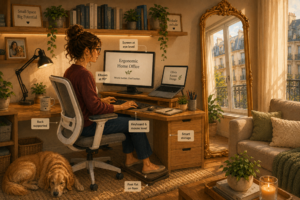
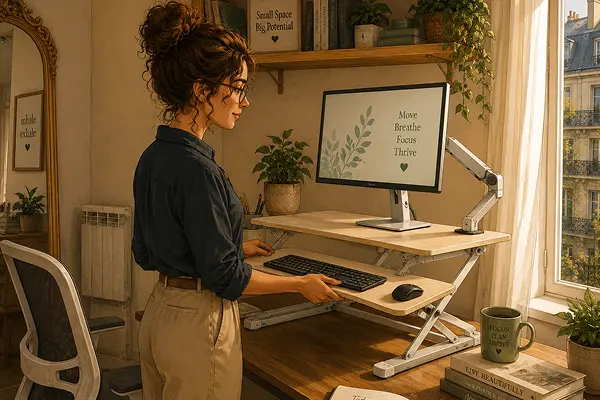
I bought a sit-stand desk converter with the full intention of standing for half my working day. For the first week, I stood for perhaps twenty minutes before my back ached and my feet complained and I lowered the desk back down with a sense of defeat. The converter sat at its lowest setting for the next three weeks until I read something that changed my approach entirely: standing desks do not work because people stand too much, too soon, for too long.
Alternating between sitting and standing is a skill that takes time to develop. Here is what actually works.
Why the Alternating Approach Matters
Prolonged sitting is associated with a range of health issues, from back pain to reduced circulation. But prolonged standing has its own problems: fatigue, varicose veins, and lower back pain from standing on hard surfaces. The benefit comes from movement and position change, not from replacing sitting with standing.
Research suggests that the optimal ratio for most people is roughly 1 hour of standing for every 2 hours of sitting, gradually increased as your body adapts. This is far less standing than most sit-stand desk owners attempt initially.
The Gradual Approach That Actually Works
Week 1 to 2
Stand for 15-20 minutes per hour, maximum. Use a timer. Sit back down before fatigue sets in, not after. Your muscles need to adapt slowly to the sustained low-level effort of standing, and pushing through fatigue creates the negative associations that cause most people to abandon sit-stand desks.
Week 3 to 4
Increase to 20-30 minutes of standing per hour if the previous week felt comfortable. The key indicator is whether you can stand without shifting your weight constantly and without back or foot discomfort. If either is present, go back to shorter sessions.
Beyond week 4
Aim for 30-45 minutes of standing per hour with natural movement breaks. At this stage, most people find a rhythm that feels natural rather than disciplined.
The Equipment That Makes a Real Difference
Anti-fatigue mat
Non-negotiable for standing desk use. A quality anti-fatigue mat reduces the stress on feet, knees, and lower back dramatically. The slight instability of the mat encourages micro-movements that keep circulation active. Expect to spend 30-80 euros for a mat that makes a genuine difference.
Footwear
Bare feet or thin socks on hard floors, even with a mat, cause more discomfort than supportive shoes. Wearing comfortable, supportive footwear while working from home is a small adjustment that significantly extends comfortable standing time.
Monitor height adjustment
This is where many sit-stand setups fail. The monitor height that is correct for sitting is almost never correct for standing. Your monitor needs to rise with the desk surface. A monitor arm is the cleanest solution, allowing independent height adjustment for both sitting and standing positions.
Activities Best Done Standing
Not all work is equally suited to standing. Reading through documents, attending video calls, reviewing content, and light email are all well-suited to standing sessions. Deep focus writing, complex analysis, and tasks requiring fine motor control are often better done seated.
When Standing Does Not Feel Right
On days with less energy, during illness, or in periods of high cognitive demand, sitting more is completely fine. The goal is a general pattern of more movement throughout the day, not a rigid schedule that creates stress when life does not cooperate.
Finding Your Rhythm
Three months after that initial defeated week, the sit-stand converter has become the thing I notice when I do not use it. Standing for a call feels natural. Sitting back down after 30 minutes of standing feels like a reward rather than a defeat.
Start with 15 minutes standing per hour. Set a timer. Sit back down on schedule. Build from there at a pace your body sets, not the one the marketing material suggests.
About Olivia
Olivia is passionate about small-space living, ergonomic home design, sustainable decor, and practical ideas that help people create beautiful and comfortable homes.