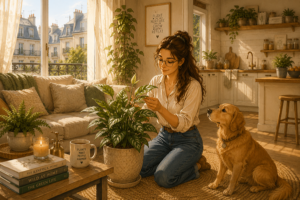
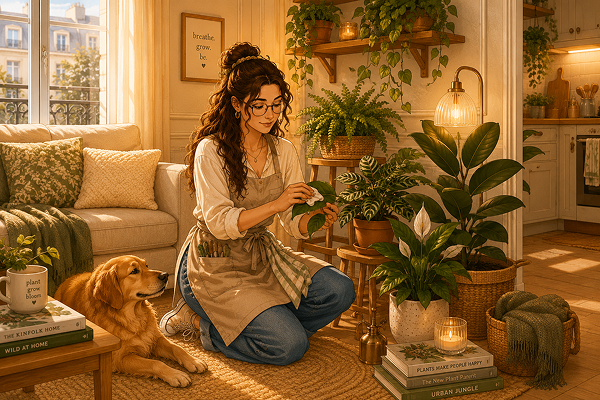
In a studio apartment, every surface does multiple jobs. The desk is also the dining table. The sofa is also the reading chair. The bedroom is also the living room. Creating a plant corner in this context isn’t just about adding greenery, it’s about carving out one small part of the room that feels intentional, calm, and unhurried. A corner that isn’t trying to be anything other than what it is.
I built mine during a particularly overwhelming period at work, and I still think it’s the most effective thing I’ve done to change how that flat felt.
Why Grouping Plants Works Better Than Scattering Them
Single plants dotted around a small apartment can look sparse and slightly sad. Grouping plants together creates a sense of abundance, allows you to build a specific atmosphere in one area, and has practical benefits, grouped plants increase local humidity and create a more stable microclimate for each other. It also means your care routine is concentrated in one spot, which makes it easier to maintain.
Choosing Your Corner
Look for a space that has some natural light, ideally within 2–3 metres of a window. A dead corner behind a sofa, an awkward gap between a bookcase and the wall, or a nook beside a window all work well. The goal is to use space that isn’t currently serving another purpose effectively, space the room has but isn’t using.
Building Layers: The Secret to a Plant Corner That Looks Considered
The most visually interesting plant corners use different heights to create depth. Think of it in three tiers, built outward from the floor:
Tier 1 — The floor layer
One or two larger statement plants directly on the floor, a fiddle leaf fig, a large monstera, an areca palm, or a tall dracaena. These anchor the corner and provide height. Choose one and let it dominate; two competing large plants fight for attention.
Tier 2 — The mid-level
A small side table, a plant stand, or a wooden stool holding medium-sized plants at various heights. This is where you add variety, different leaf shapes, different pot sizes, different textures. Let it feel slightly collected rather than perfectly matched.
Tier 3 — The top or trailing layer
A trailing plant on a high shelf, pothos, string of pearls, or heartleaf philodendron, cascading downward, or a small hanging planter near the ceiling. This draws the eye upward and makes the ceiling feel higher than it is.
Plants That Create a Calm Atmosphere
For a genuinely restful corner, lean toward soft shapes and deep greens rather than spiky or dramatic varieties:
- Calathea — patterned leaves that move gently throughout the day, visually meditative
- Peace lily — elegant white flowers, purifies air, prefers shade
- Boston fern — lush and full, the most classic ‘calming’ plant I know
- Pothos — easy, trailing, connects the different levels of the corner
- Rubber plant — bold glossy leaves, strong presence without being aggressive
The Details That Elevate a Plant Corner
- Choose pots in a consistent palette, terracotta, white, or earth tones create cohesion without effort
- Add a small warm-toned lamp nearby, plants look beautiful under warm light in the evening, and it extends the use of the corner into the night
- Include one textural element, a woven basket, a smooth stone, a piece of driftwood at the base of a large plant
- Keep it tidy, dead leaves and dusty pots undo the calm immediately
A Corner That Works for You
In a small apartment where every corner works hard, a plant corner is the one that works for you emotionally rather than practically. It’s the part of the room you glance at after a difficult meeting, sit beside with a book, or tend to quietly at the end of a long day.
Start with three plants, a stand, and a simple lamp. The corner will show you what it needs next.
About Olivia
Olivia is passionate about small-space living, indoor gardening, sustainable home decor, and practical ideas that help people create beautiful and comfortable homes.