
The first time I read the ingredients list on a commercial air freshener, I put it back on the shelf and didn’t buy another one. The list was long, largely unpronounceable, and included several compounds I’d seen flagged in indoor air quality research. In a small apartment where you’re breathing recirculated air, what you spray into that air matters.
Natural room fresheners work differently from commercial ones they don’t mask odours with synthetic fragrance, they address them. And they’re simple to make from ingredients that cost almost nothing.
Understanding the Difference Between Masking and Freshening
Commercial air fresheners typically work by releasing synthetic fragrance compounds that overwhelm your olfactory system you stop noticing the bad smell because a stronger smell has displaced it. Natural fresheners work differently: they either neutralise odour molecules chemically (baking soda, white vinegar), or replace stale air quality with genuine plant compounds (essential oils, fresh botanicals).
The difference in a small apartment is noticeable. The air actually smells clean rather than chemically perfumed.
Simple Natural Room Fresheners You Can Make Today
The essential oil spray
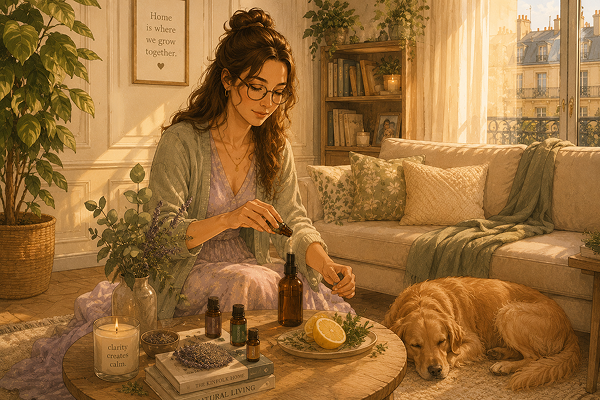
Fill a small glass spray bottle with water, add 15–20 drops of essential oil per 100ml, and add a teaspoon of witch hazel or vodka to help the oil disperse in the water. Shake before each use and spray into the air or onto soft furnishings. This is the closest natural equivalent to a commercial room spray and takes about two minutes to make.
Good combinations: lavender and bergamot (calming), eucalyptus and lemon (fresh and clean), peppermint and rosemary (energising), frankincense and cedarwood (warm and grounding).
The simmering pot
A small pot of water on the hob with orange or lemon peel, a cinnamon stick, a few cloves, and a sprig of rosemary or thyme fills a small apartment with natural fragrance within minutes. It costs almost nothing, lasts for hours on a very low heat, and smells genuinely wonderful rather than artificially sweet. Replace the water as it evaporates.
Baking soda odour absorbers
Fill a small open jar with baking soda and add 10–15 drops of your preferred essential oil. Place in areas prone to odour — inside a wardrobe, under a sink, in a bathroom corner. The baking soda absorbs odour molecules; the essential oil releases a gentle scent. Refresh the essential oil drops every 2–3 weeks, replace the baking soda every month or two.
Dried botanical bundles
A bundle of dried lavender, rosemary, or eucalyptus placed in a vase, hung in a wardrobe, or tucked behind a radiator releases a gentle, lasting natural scent. Eucalyptus in particular has a fresh, slightly medicinal quality that works beautifully in bathrooms and kitchens. The scent is subtle and lasts for months.
Plants That Naturally Improve Air Quality
Some houseplants actively improve indoor air quality by absorbing VOCs and releasing oxygen. In a small apartment, even a few plants make a measurable difference:
- Peace lily — absorbs benzene, formaldehyde, and trichloroethylene; also naturally humidifying
- Spider plant — effective at absorbing carbon monoxide and formaldehyde
- English ivy — shown in studies to reduce airborne mould spores
- Snake plant — releases oxygen at night, making it particularly good for bedrooms
The Best Essential Oils for Room Freshening
- Lemon and citrus oils — bright, clean, uplifting; excellent in kitchens
- Eucalyptus — fresh and clarifying; natural antibacterial properties
- Lavender — calming and universally pleasant; works in any room
- Tea tree — strong antimicrobial; use sparingly as the scent is strong
- Peppermint — energising and fresh; particularly effective for neutralising cooking odours
A Home That Smells Like Itself
The best-smelling homes I’ve been in don’t smell of any particular product. They smell of clean air, a hint of whatever was last cooked, a plant in the corner, and sometimes a candle. That’s the goal not a synthetic approximation of freshness, but actual freshness.
Make the essential oil spray this evening. Start there.
About Olivia
Olivia is passionate about small-space living, sustainable home decor, indoor gardening, and practical ideas that help people create beautiful and comfortable homes.