
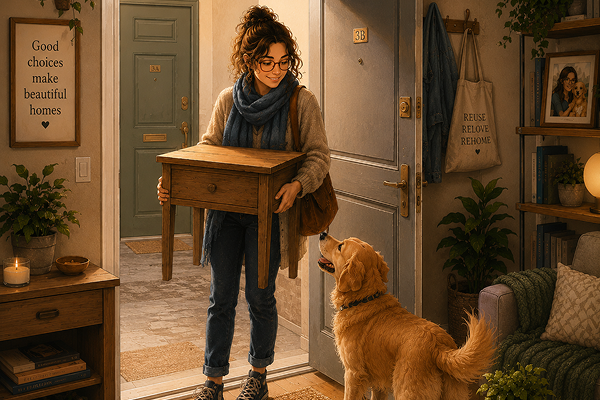
The first piece of furniture I bought secondhand was a small oak side table from a woman who was moving abroad. It cost 8 euros, had a slight ring mark on the surface from years of coffee cups, and it’s still the piece I get the most compliments on. Nobody has ever looked at it and thought ‘charity shop.’ They look at it and think ‘where did you find that?’
Decorating a small apartment with sustainable, secondhand furniture isn’t about making do with less. It’s about choosing more deliberately — and often ending up with something far more interesting than anything available in a flat-pack catalogue.
Why Secondhand Works Especially Well in Small Apartments
Small apartments don’t need much furniture — which means each piece matters more. A single well-chosen secondhand chair can define a room in a way that three mediocre flat-pack pieces never will. The constraint of limited space actually works in favour of the secondhand approach: you’re looking for one good thing, not filling a room wholesale.
Where to Find Good Secondhand Furniture in European Cities
- Facebook Marketplace and local buy-sell groups — the most reliable source for affordable pieces in good condition, often from people moving or renovating
- Vinted, Wallapop, and country-specific platforms — excellent for smaller items and decorative pieces
- Charity shops and thrift stores — slower to find standout pieces but prices are often the lowest available
- Estate sales and house clearances — occasionally announced on local community boards or Facebook events; the quality can be exceptional
- Architectural salvage shops — for genuinely unique pieces: old doors repurposed as desks, reclaimed wood shelving, vintage industrial lighting
How to Choose Secondhand Pieces for a Small Space
Prioritise scale
In a small apartment, oversized furniture dominates the room in all the wrong ways. Measure your space before you shop, carry the measurements with you, and stick to them. A beautiful piece at the wrong scale will make your apartment feel smaller and more crowded than it is.
Focus on solid materials
Secondhand solid wood, metal, and ceramic age well and can be refreshed if needed. Secondhand particle board or MDF — the material in most flat-pack furniture — deteriorates over time and can’t be refinished. When buying secondhand, solid materials are almost always worth the slightly higher price.
Don’t be afraid of imperfection
A scratch, a small chip, or a worn edge on a solid wood piece is character, not damage. These marks tell the story of an object that has been genuinely used and genuinely cared for. In a small apartment where each piece is visible, that kind of history adds warmth that brand-new furniture simply doesn’t have.
Simple Ways to Refresh Secondhand Finds
- A coat of chalk paint transforms almost any wooden piece — no sanding required, available in beautiful muted tones
- New handles and knobs completely change the personality of a secondhand chest of drawers or cabinet
- A beeswax polish revives tired wood surfaces and brings back colour and depth
- Re-upholstering a chair seat is simpler than it looks — a staple gun, half a metre of fabric, and an afternoon is usually enough
Building a Cohesive Look From Secondhand Pieces
The concern most people have about decorating secondhand is coherence — will a collection of pieces from different eras and sources look intentional or chaotic? The answer is in the editing. Choose a consistent colour palette (warm neutrals, natural wood tones, or a single accent colour repeated across pieces) and the diversity of sources and styles becomes an asset rather than a liability.
The Best Rooms to Start With
If you’re new to secondhand decorating, start with one room or one category. Secondhand art and mirrors are low-risk and high-impact. A single secondhand armchair in an otherwise functional living room adds more character than any amount of new accessories. Build slowly, choose carefully, and resist the temptation to fill space quickly.
The table with the coffee ring is still there. And it still gets the compliments.
About Olivia
Olivia is passionate about small-space living, sustainable home decor, indoor gardening, and practical ideas that help people create beautiful and comfortable homes.