Buying a plastic-wrapped pot of supermarket basil only to watch it droop by Thursday is a rite of passage for apartment dwellers. Growing fresh herbs on a small apartment windowsill sounds effortless in theory, yet dim urban streets, north-facing windows, and short winter days quickly turn a bright kitchen fantasy into a graveyard of leggy stems.
The catch is rarely a lack of gardening talent. Most grocery-store herbs are sun-hungry Mediterranean natives forced under intense greenhouse lights, then dropped into a shaded apartment corner with the wrong watering routine. With a few smart swaps in plant choice, light management, and harvesting habits, even a modest, low-light windowsill can supply fresh flavour all year.
Why Growing Your Own Kitchen Herbs Is Worth the Shelf Space
Keeping edible greenery within arm’s reach of the stove solves more than a last-minute garnish problem. According to household gardening data from Statistics Canada, one in five herb-growing households (21%) cultivates herbs indoors, a figure that reflects how many city residents rely on windowsills when outdoor seasons are short or balconies are unavailable.
Beyond saving money on half-used supermarket herb packets that wilt in the fridge, tending a small kitchen garden offers measurable everyday perks:
- Built-in stress relief during busy routines: Research highlighted by the Harvard T.H. Chan School of Public Health notes that hands-on plant care and sensory interaction, such as crushing a fragrant leaf between your fingers, help lower daily stress and encourage mindful pauses.
- A tangible sense of accomplishment: Guidance from Texas A&M AgriLife Extension points out that nurturing edible plants from leaf to plate builds quiet pride and encourages healthier home cooking.
- Zero-mile flavour and less packaging waste: Snipping three sprigs of chives for morning eggs eliminates single-use plastic clamshells and delivers essential oils at peak freshness.
Why Most Supermarket Herb Pots Struggle Indoors
When a grocery-store herb collapses within a week, two hidden factors are usually at work. First, commercial growers pack twenty or thirty seedlings into a single tiny pot so it looks lush on the shelf; once home, those roots compete fiercely for water and nutrients. Gently dividing a crowded supermarket pot into two containers with fresh, well-draining potting mix gives the roots breathing room from day one.
Second, light requirements vary dramatically across culinary herbs. Woody herbs native to rocky Mediterranean hillsides, such as rosemary, thyme, oregano, and sweet basil, need six to eight hours of direct sunlight daily. Placed on an interior sill that receives only diffused daylight, they stretch toward the glass, lose flavour, and eventually stall.
Culinary Herbs That Actually Tolerate Low-Light Windowsills
Drawing on practical cultivation advice from the Royal Horticultural Society (RHS) and the University of Vermont Extension, leafy herbs adapted to cooler, dappled habitats perform far better on dim windowsills than woody sun-lovers:
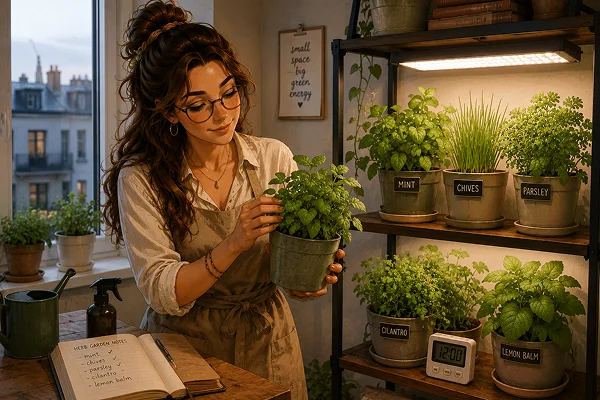
- Mint (Mentha): Vigorous, forgiving, and happy in partial shade. Always give mint its own pot, as its runners quickly crowd out slower neighbours.
- Chives (Allium schoenoprasum): Compact, tolerant of indirect light, and fast to regrow after a haircut.
- Flat-leaf and curly parsley (Petroselinum crispum): Slower to germinate from seed, so starting with a young nursery plant works best; it handles cool rooms and moderate light gracefully.
- Cilantro / Coriander (Coriandrum sativum): Actually prefers cooler indoor temperatures and partial shade, whereas intense summer heat causes it to bolt into flower prematurely.
- Lemon balm (Melissa officinalis): A shade-tolerant member of the mint family that thrives in bright indirect light and releases a bright citrus aroma whenever brushed.
If your kitchen faces north and receives minimal direct sun year-round, pairing these culinary herbs with foliage tips from our guide on keeping indoor plants alive at a north-facing apartment window helps you work with your apartment’s natural light rather than against it.
Maximising Dim Natural Light, With or Without a Grow Light
You do not need a conservatory to keep herbs thriving, though small adjustments make a noticeable difference in winter:
- Clean the windowpane and clear the sill: Urban dust and nearby blinds can quietly block a surprising share of winter daylight.
- Use light-coloured pots or a reflective backdrop: White ceramic planters or a pale wall behind the sill bounce ambient light back onto the shaded side of the foliage.
- Rotate pots every three to four days: Turning each container a quarter-circle keeps stems growing upright instead of leaning sharply toward the glass.
- Add a compact full-spectrum LED grow light: When natural daylight drops below four or five hours in autumn and winter, a slim clip-on or under-cabinet LED grow light positioned 15 to 20 cm above the leaves for 12 to 14 hours a day keeps herbs compact, aromatic, and productive without high electricity use. Look for low-heat LEDs with a built-in timer so light cycles stay consistent.
The Watering Mistake That Kills More Herbs Than Darkness
In a dimly lit apartment, soil dries out much more slowly than it does on a sunny balcony. Watering on a rigid Sunday schedule is the fastest path to soggy roots and fungus gnats.
Before reaching for the watering can, press your fingertip about 2 cm into the potting mix. If it feels cool and damp, wait another day or two. When the top layer feels dry, water thoroughly until excess drains out the bottom holes, then empty the saucer after ten minutes so roots never sit in standing water. If you travel occasionally or prefer steady moisture control, our overview of self-watering pots for small apartments explains how sub-irrigation reservoirs prevent both drought stress and overwatering.
How to Harvest Herbs So They Grow Back Bushier
Treat your windowsill herbs like a haircut rather than a clear-cut. Pulling individual large leaves off the bottom weakens the stem, while chopping the top half off in one go shocks the plant.
Instead, use clean kitchen scissors to snip stems just above a pair of leaves (a leaf node). Within days, two new shoots will emerge from that node, turning a single tall stalk into a fuller, bushier plant. Follow the one-third rule, never harvest more than a third of the foliage at once, and snip in the morning when aromatic essential oils are most concentrated.
Start with two dependable favourites like chives and mint, learn the rhythm of your windowsill, and let fresh homegrown flavour become the easiest part of dinner.
About Olivia
Olivia Knows Things shares practical, research-backed ideas for living well in small apartments and compact urban spaces. Every guide focuses on realistic, sustainable, and renter-friendly solutions for indoor gardening, ergonomic home offices, and conscious home decor.